How to Ask Your Barber for the Perfect Fade
The most common reason a fade disappoints is not the barber - it is the brief. Walk into any barbershop in Camden Town with a clear idea of what you want and you are already halfway to a great result. Here is how to build that brief.
What exactly is a fade, and why does it matter how you describe it?
A fade is a graduated blend where the hair transitions from shorter at the sides and back to longer on top. The catch is that "fade" covers a wide range of looks - from a subtle taper that is barely noticeable to a skin fade that goes all the way to bare scalp.
When you sit down and say "just a fade, please" without any further detail, your barber has to guess. They will default to whatever they consider a standard fade, which may or may not be what you pictured. A two-minute conversation before the cut starts saves a lot of frustration at the end.
The variables that actually matter:
- Height: where on the head does the fade begin
- Depth: how dramatic is the graduation (soft blend versus sharp contrast)
- Finish at the bottom: skin, zero, or taper
- What happens on top: length, texture, how it connects to the sides
Get those four right and you have everything your barber needs.
How do I describe where I want the fade to sit?
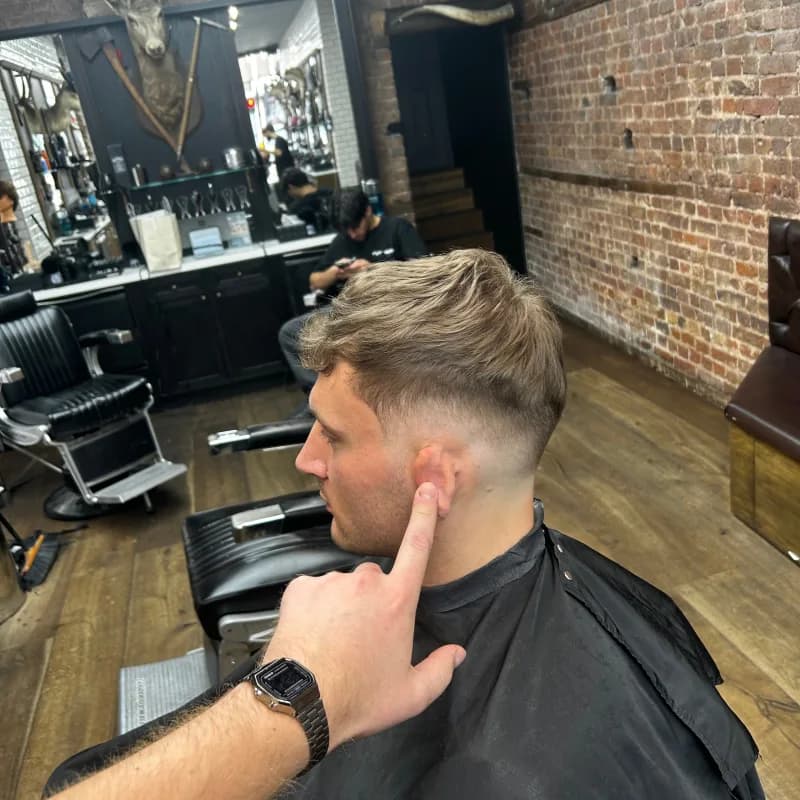
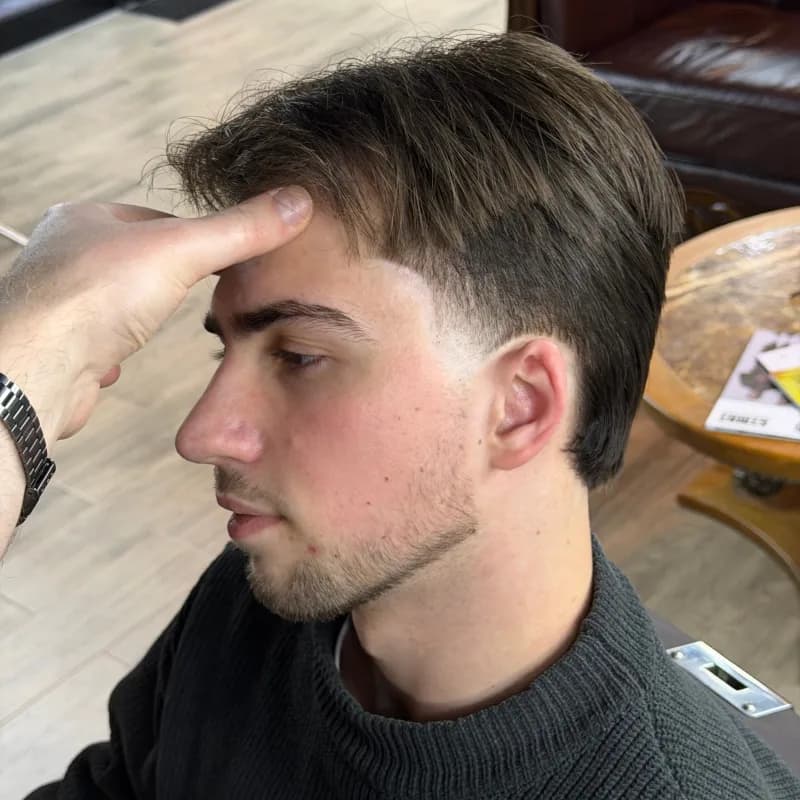
Fade height is the most important variable to nail down first. There are three standard positions, and pointing to the spot on your own head works just as well as the terminology.
Low fade - the blend begins just above the ear and at the natural neckline. It is the most subtle option. The hair on the sides still has length at the top of the sides, and the contrast between sides and top is less dramatic. Works well for professional environments and suits longer hair on top.
Mid fade - the blend starts roughly halfway up the side of the head, level with the top of the ear. This is probably the most common request at barbershops in Camden right now. It gives a clean, defined look without going all the way to a high fade.
High fade - the blend starts near the top of the sides, quite close to where the hair on top begins. The contrast is sharp. This looks intentional and bold, but it also requires more frequent upkeep because it grows out faster and more visibly than a low or mid fade.
If you are unsure, mid fade is the safe starting point. You can always go higher next time once you know how the look suits you.
What is the difference between a skin fade, zero fade, and taper?
This is where most of the confusion lives.
A skin fade (sometimes called a bald fade) goes all the way down to bare skin at the bottom of the sides and back. The clipper blade sits flat against the scalp with no guard. It produces the sharpest, highest-contrast look. It also requires the most maintenance - the regrowth is obvious within a couple of weeks.
A zero fade uses the smallest clipper guard rather than bare blade. The result is a very thin layer of stubble at the base rather than fully bare skin. The difference in appearance is subtle, but for some hair types - particularly very dark, coarser hair on lighter skin - a zero fade can look cleaner and more even than a full skin fade.
A taper is different in character from both. It is a gradual shortening of the hair from top to bottom, but without the dramatic graduation of a fade. A tapered neckline is common on traditional scissor cuts. It looks neater than leaving the neckline untreated, but it does not produce the sharp contrast of a fade.
Most men who ask for a "tidy up" actually want a taper, while most men who want a skin fade need to say exactly that.
How do I talk about the top - length, texture, and the blend?
The connection between the fade and the hair on top is where a cut lives or dies. A well-executed fade blended badly into the top looks unfinished.
A few things to think through before you sit down:
Length on top - do you want to keep the length you have, or are you taking it down? If you are keeping length, tell your barber how much you want off. If you want it shorter, a rough guide helps: "shorter on the top but still with some length to style" is more useful than just "shorter".
Texture and movement - do you want the top to feel natural and move with your hair's own texture, or do you want a clean, defined finish? Both are valid; they just require different techniques.
The blend - how sharp is the line where the sides meet the top? A hard part (a razor-sharp line cut or razored in) creates a deliberate separation. No parting and a smooth blend feels less structured but works for longer or more textured styles on top.
Should I bring a photo? Honest answer
Yes. Every time. A photo on your phone takes three seconds to pull up and removes every ambiguity. Save a few examples - two or three images of fades you like, ideally on different hair types so your barber can see what specifically appeals to you about each one.
A good barber will not judge you for bringing a reference. They will use it to make sure they understand what you want, and they will tell you honestly if your hair's texture, density, or growth pattern means the result will look slightly different. That honesty is part of the service.
At Frisor Barbershop on Water Lane in Camden, the barbers will work from a photo and confirm they understand the brief before touching the clippers. If something about the reference is unrealistic for your hair type, they will say so.
What should I tell my barber if I have no idea what I want?
Start with what you do not want. "I do not want to look too sharp or too military" tells a barber a lot. "I want something that works with my wavy hair and does not need too much product" tells them even more.
From there, a good barber will ask questions and offer options. Trust that process. Booking with the same barber a few times builds up a working reference point - after two or three cuts, your barber knows your hair's growth patterns, how it behaves in between cuts, and what works for your face shape.
How often do I need to come back to keep a fade looking sharp?
A skin fade or high fade starts to look grown-out within two to three weeks for most people. The contrast that makes it look clean is also what makes regrowth obvious.
A mid or low fade on thicker or darker hair can hold a presentable shape for three to four weeks. If you are maintaining for an event or a period when you want to look particularly sharp, three weeks between cuts is a reliable cadence.
The barbers at Frisor at Hawley Wharf are booking through Fresha. Free cancellation if your plans change. Book your chair and have the conversation before the cut starts - it makes everything that follows easier.
Common questions
- What is the difference between a skin fade and a zero fade?
- A skin fade goes all the way down to bare skin at the bottom. A zero fade stops at the shortest clipper guard (zero guard), leaving a very thin layer of stubble rather than bare skin - it is slightly softer and suits some hair types better.
- How do I tell my barber how high I want my fade?
- Use these three positions as reference: low fade (starting just above the ear and neckline), mid fade (starting around the middle of the head above the ear), and high fade (starting near the top of the sides). You can point to the spot on your head to be sure.
- Should I bring a photo to show my barber?
- Yes, always. A photo removes ambiguity on both sides. Save two or three examples of fades you like to your phone before the appointment. Your barber will tell you honestly if your hair texture means the result will differ slightly.
- How often should I get a fade touched up?
- A fade starts to look grown-out after three to four weeks for most people. If you want it to look sharp at all times, booking every three weeks is a reasonable cadence. Every four to six weeks is more common and still produces a presentable result.